It's Time for a New Water Heater — Now What?
Most Long Beach homeowners don't think about their water heater until something goes wrong — cold showers, a puddle on the garage floor, or a rumbling noise that keeps getting louder. When that moment comes, you have a decision to make: replace your old tank unit with another tank model, or make the switch to a tankless on-demand system?
Long Beach Plumbers helps homeowners throughout Long Beach, Signal Hill, East Long Beach, and Seal Beach navigate this choice every week. Here's what you actually need to know before spending a dollar.
How Traditional Tank Water Heaters Work
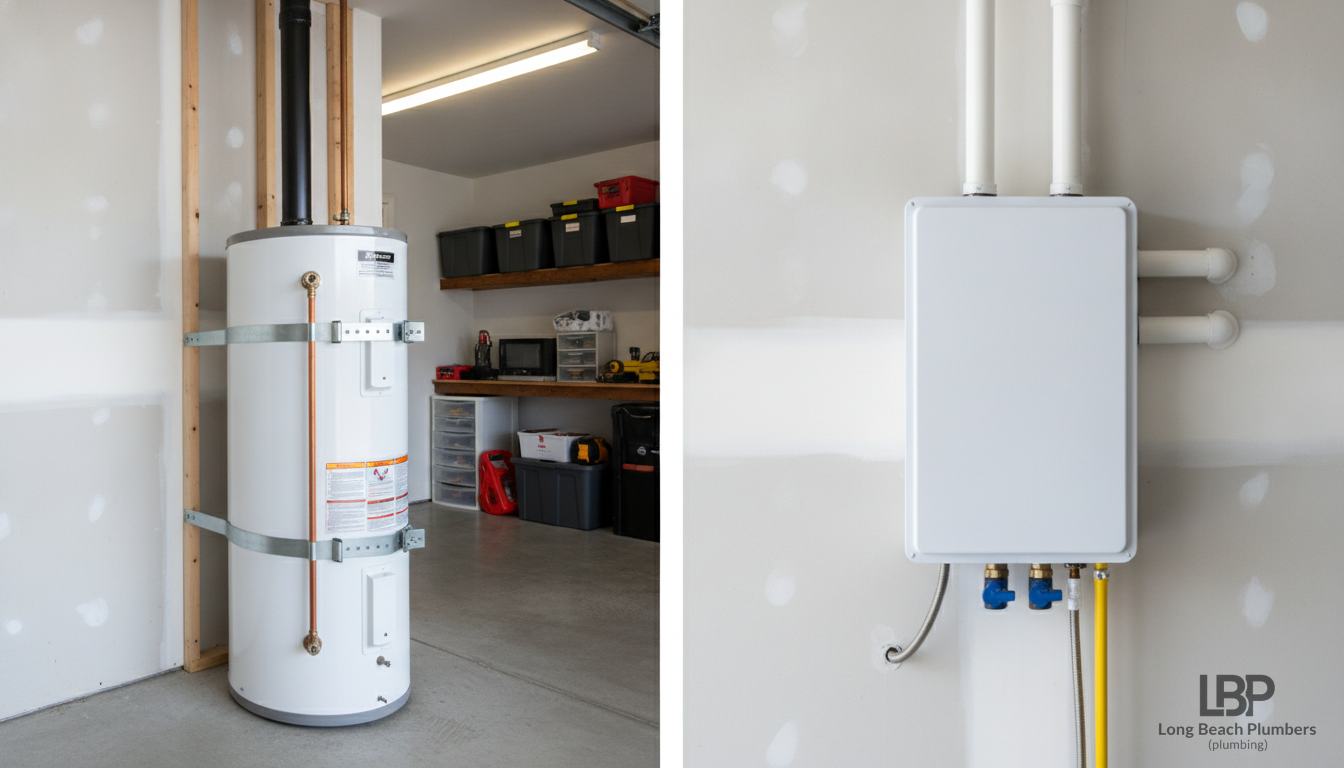
A conventional storage tank water heater holds 30 to 80 gallons of water and keeps it hot 24 hours a day using either a gas burner or electric heating elements. When you turn on the hot water tap, pre-heated water flows out of the top of the tank and cold water enters at the bottom to be reheated.
The big downside is standby heat loss — your water heater is constantly consuming energy to keep water hot even when nobody in your home is using it. In a mild coastal climate like Long Beach's, this inefficiency is somewhat reduced compared to colder regions, but it still adds up over the course of a year.
How Tankless Water Heaters Work
Tankless units (also called on-demand or instantaneous water heaters) have no storage tank. Instead, when you open a hot water tap, cold water flows through a heat exchanger where a powerful gas burner or electric element heats it instantaneously before it reaches your fixture. The moment you turn off the tap, the heater shuts off completely — zero standby energy loss.
Modern gas-fired tankless units for residential use are typically rated at 140,000 to 199,000 BTU/hour, which is roughly 5–8 times the output of a standard tank water heater's burner. That power is what allows them to heat water on demand without storing it first.
Pros and Cons: Tank Water Heaters
Traditional tank water heaters have earned their place for good reason:
- Lower upfront cost — A quality residential tank unit costs significantly less than a comparable tankless system, both for equipment and installation labor
- Simple installation — Replacing a tank with another same-size tank usually requires minimal changes to existing gas, electrical, and venting connections
- Reliable performance for simultaneous demand — A 50-gallon tank can supply hot water to two showers and a dishwasher at once without any pressure or temperature drop, as long as you don't exceed its first-hour rating
- Shorter lifespan — Tank water heaters typically last 8–12 years; the anode rod must be inspected and replaced periodically to prevent tank corrosion
- Sediment buildup — Long Beach's water has moderate mineral content, and sediment accumulates on the tank bottom over time, reducing efficiency and eventually causing the popping and rumbling sounds that signal a heater nearing the end of its life
Pros and Cons: Tankless Water Heaters
Tankless systems have real advantages that are worth understanding carefully:
- Endless hot water — You'll never run out as long as demand doesn't exceed the unit's flow rate capacity
- Energy savings — The U.S. Department of Energy estimates tankless systems can be 24–34% more energy-efficient than tank heaters for homes that use under 41 gallons of hot water per day
- Longer lifespan — Quality tankless units are rated for 20+ years with proper maintenance, roughly twice the lifespan of a tank unit
- Space savings — A wall-mounted tankless unit is about the size of a large suitcase, freeing up floor space in garages and utility closets
- Higher upfront cost — Equipment and installation costs are significantly higher, particularly if your home needs a gas line upsized to support the higher BTU demand or new venting installed
- Cold water sandwich effect — If you turn on hot water briefly, turn it off, then turn it on again quickly, you may get a brief burst of cold water between the two uses as the heat exchanger cycles back up
California Requirements Every Long Beach Homeowner Should Know
Water heater installations in California are subject to specific requirements that affect both tank and tankless systems:
- Seismic strapping — California requires tank water heaters to be secured to wall studs with seismic strapping straps in two locations — upper third and lower third of the tank — to prevent toppling during an earthquake. This is non-negotiable and is checked during home inspections.
- Title 24 energy compliance — New water heater installations must meet California's Title 24 energy efficiency standards. This affects which equipment models are eligible for installation and influences the choice between standard and high-efficiency units.
- T&P relief valve and discharge pipe — Every water heater must have a properly sized temperature and pressure relief valve with a discharge pipe that terminates within 6 inches of the floor or to an approved drain.
Our water heater installation team ensures every unit we install meets all California requirements so you're fully protected during a future home inspection or insurance review.
Which Option Makes More Sense for Your Long Beach Home?
The honest answer depends on your specific situation:
- Choose a tank replacement if you want the lowest upfront cost, your existing gas and venting infrastructure is already sized for a tank unit, and you don't plan to stay in the home long enough to recoup a tankless investment through energy savings
- Choose tankless if you have a growing household with high hot water demand, you plan to stay in the home for 10+ years, your garage or utility closet is space-constrained, or you want to modernize your home's energy profile for resale value
Homes in East Long Beach and Carson where larger families are common often benefit most from tankless systems because the unlimited hot water supply eliminates the scheduling around shower time that tank owners accept as normal.
Signs Your Current Water Heater Needs Attention Now
Don't wait for a complete failure — these warning signs mean it's time to call us:
- Water that takes much longer than usual to get hot at fixtures
- Rust-colored or discolored hot water from your taps
- Visible rust staining or moisture around the base of the tank
- Loud popping, rumbling, or banging from the tank during heating cycles
- A water heater that's 10 or more years old with any of the above symptoms
If you're noticing moisture around your water heater connections, our leak detection team can confirm whether you have an active supply line leak before it causes water damage to your floor or walls.
Schedule Your Water Heater Assessment Today
Long Beach Plumbers provides water heater repair and replacement throughout Long Beach and surrounding communities including Wilmington, San Pedro, and Signal Hill. We're available Monday through Sunday, 8 AM to 6 PM.
Call us at +1 (562) 573-1788 or email [email protected] to discuss whether repair, tank replacement, or a tankless upgrade is the right move for your home.